

There is some amazing wildlife on your doorstep if you know where to look. Professor Bill Amos of the Department of Zoology writes about looking closely at insects:
‘In these times of lockdown, a little bit of nature goes a long way. We have a small garden in central Cambridge and I thought I would challenge myself to photograph a new insect every day. Of course, it starts easy and gets progressively more difficult, but it is great fun every coffee break or lunchtime to pop out and spend 10 minutes seeing what has turned up. There are quite a few regulars that appear every day, but also a wonderful stream of new species, some of which are quite surprising and which I might not have noticed without the challenge. I have particularly focused on hoverflies, a childhood passion, but I’ll take anything to keep my list going! Occasionally I take my exercise with a walk around Byron’s pool, and this helps add new beasties on slow days. I also switch a light on in the evening to see what turns up. The only camera I am using is an Olympus Tough, which is compact and has a macro setting that claims up to 50X magnification. As I am discovering, beauty is often found by going really close to something everyday like a gnat or a ladybird.’
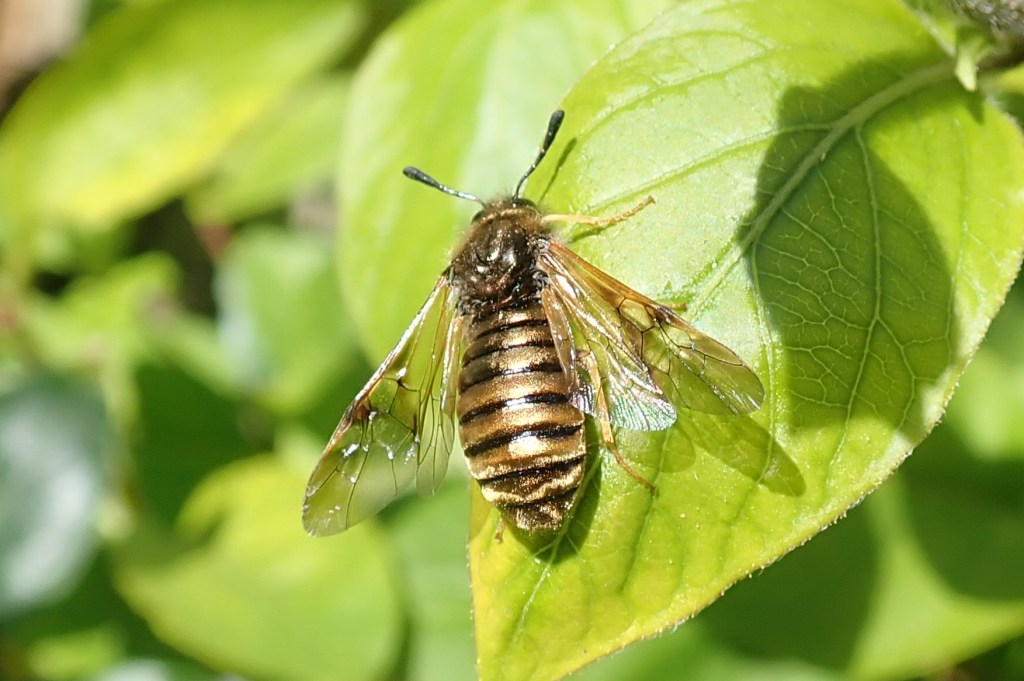
A rather rare sawfly, Abia lonicerae, the honeysuckle sawfly, sitting on, honeysuckle!

A chironomid, probably Microtendipes pedellus. These are common in our garden and this one was sitting on an outside light. The body is a lovely green / blue colour.
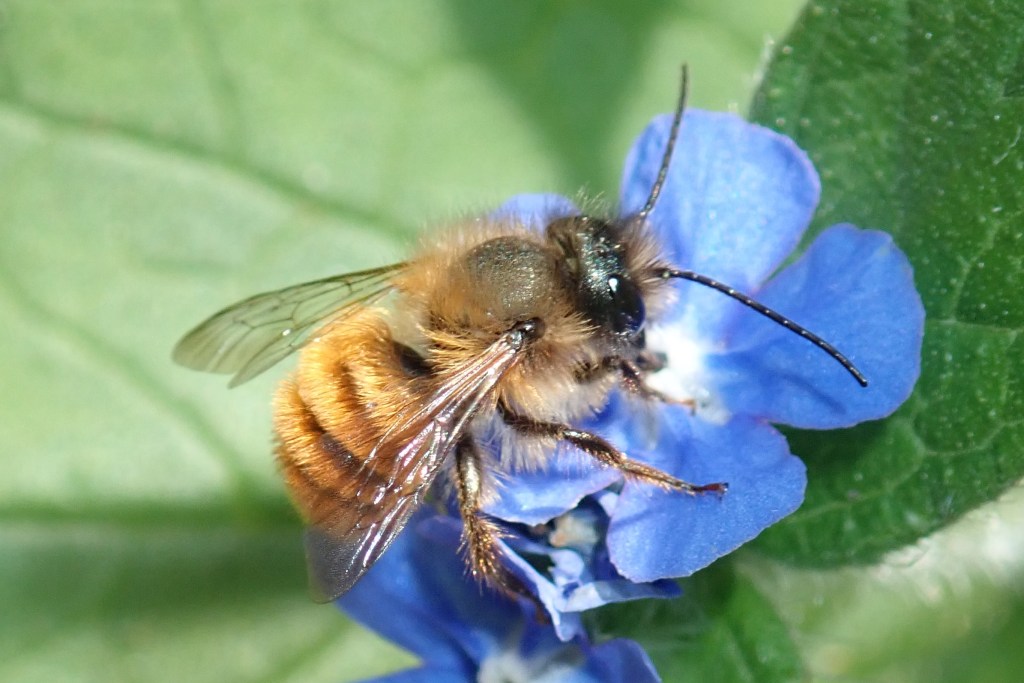
One of the commoner solitary bees, the mason bee, Osmia bicornis. This one is a male. The female is larger and has two ‘horns’ in the middle of her face, hence the name. This is one of the species that will gratefully make use of ‘bee hotels’
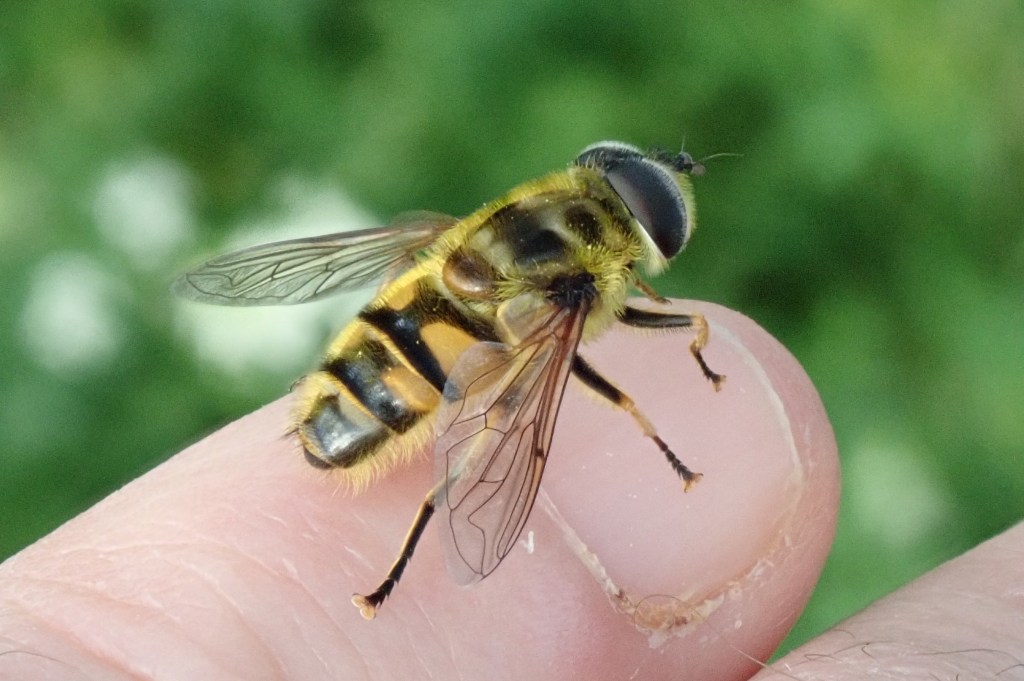
The batman hoverfly, look at the bat symbol in its thorax! This species, Myathropa florea, is a form of drone fly. Drone flies are large hoverflies that mimic bees. This one was hovering under a tree and when I went close to get a photo it seemed to feel that sitting on me was easier than flying. Whenever I held my hand out it would settle on me.
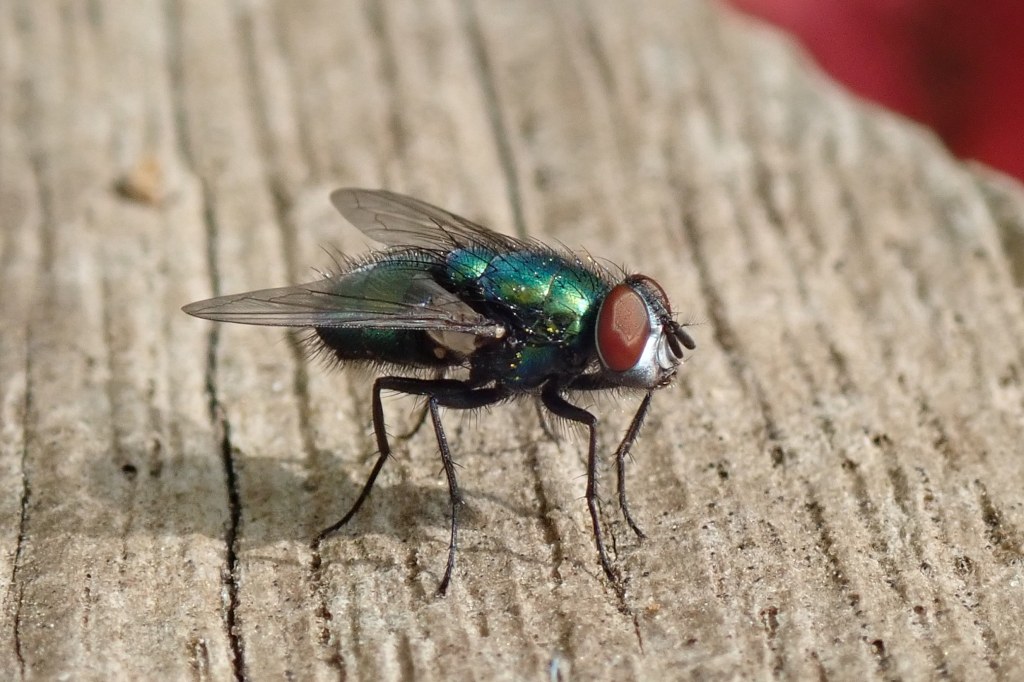
The greenbottle fly, Lucilia Caesar, a Jekyl and Hyde insect. The adult is a metallic beauty, while its larvae feed on rotting flesh.
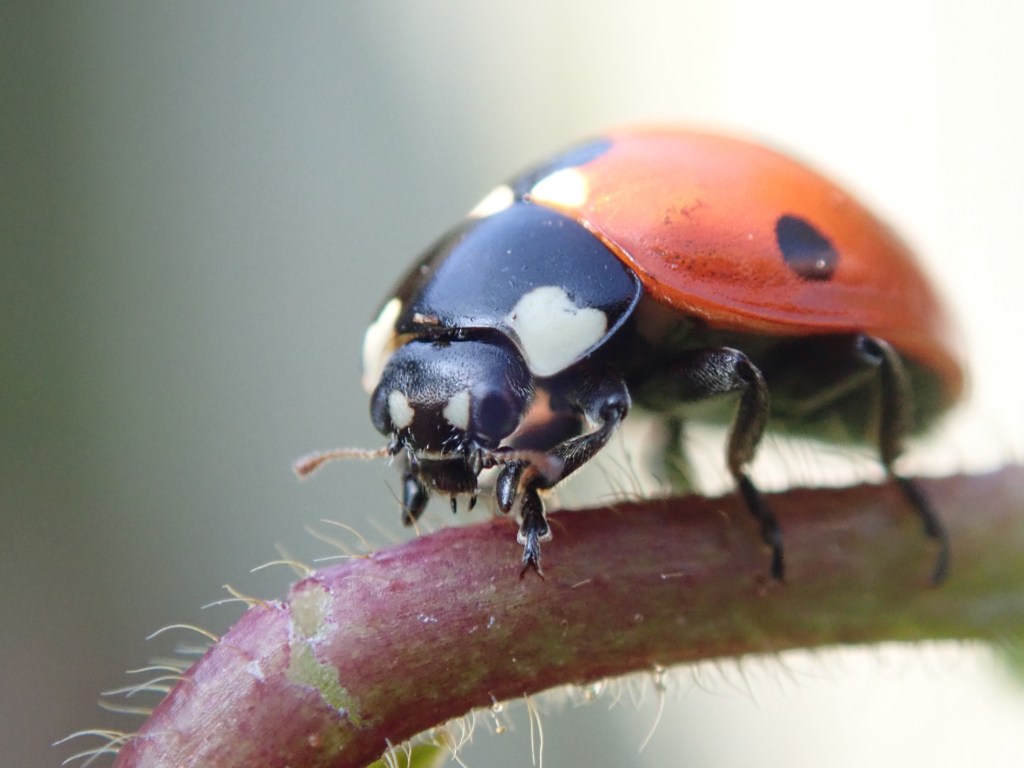
A seven-spot ladybird, Coccinella septempunctata. In previous years I would find lots of the invasive harlequin ladybird but this year almost all the ladybirds are seven-spots. I hope they are making a comeback.
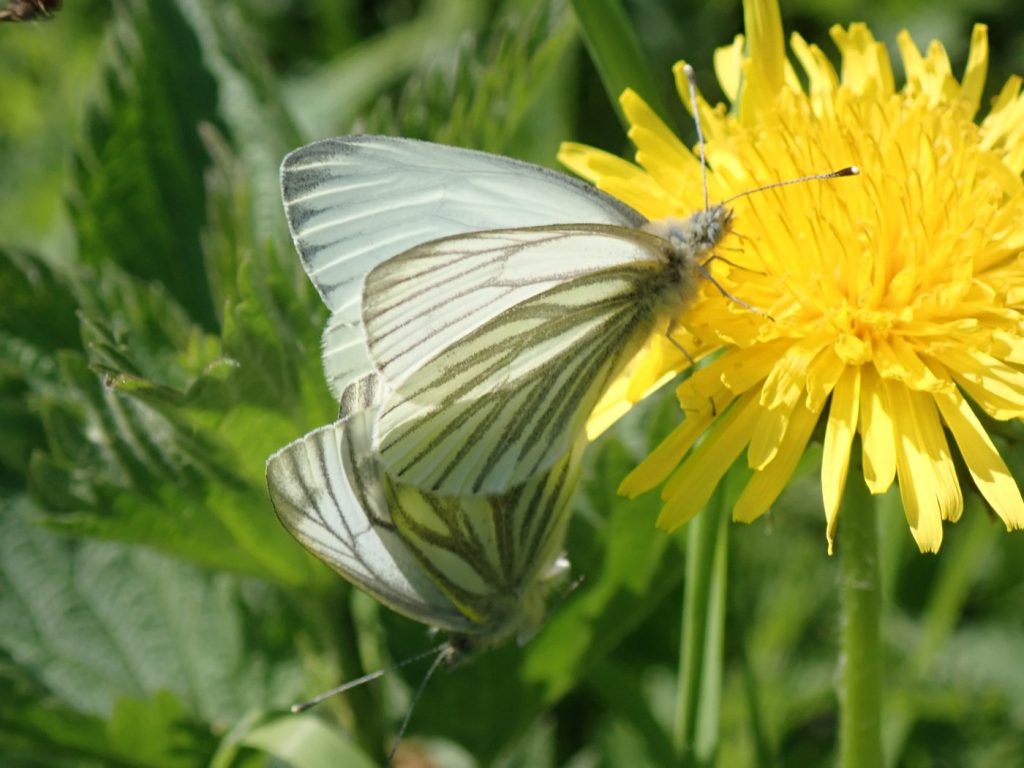
A pair of mating green-veined whites, a lovely little butterfly. 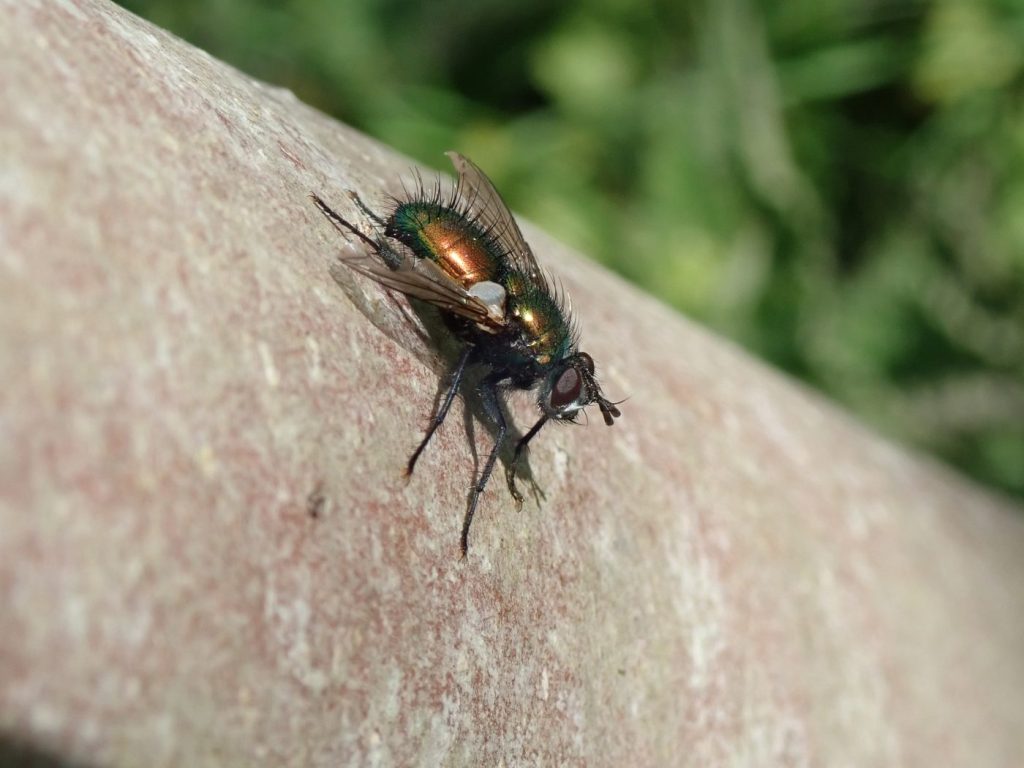
This is a close relative of the common greenbottle fly. The greenbottle is a wonderful metallic green. This one is similar but a little hairier and, although green at some angles, the dominant appearance is a dazzling metallic copper. 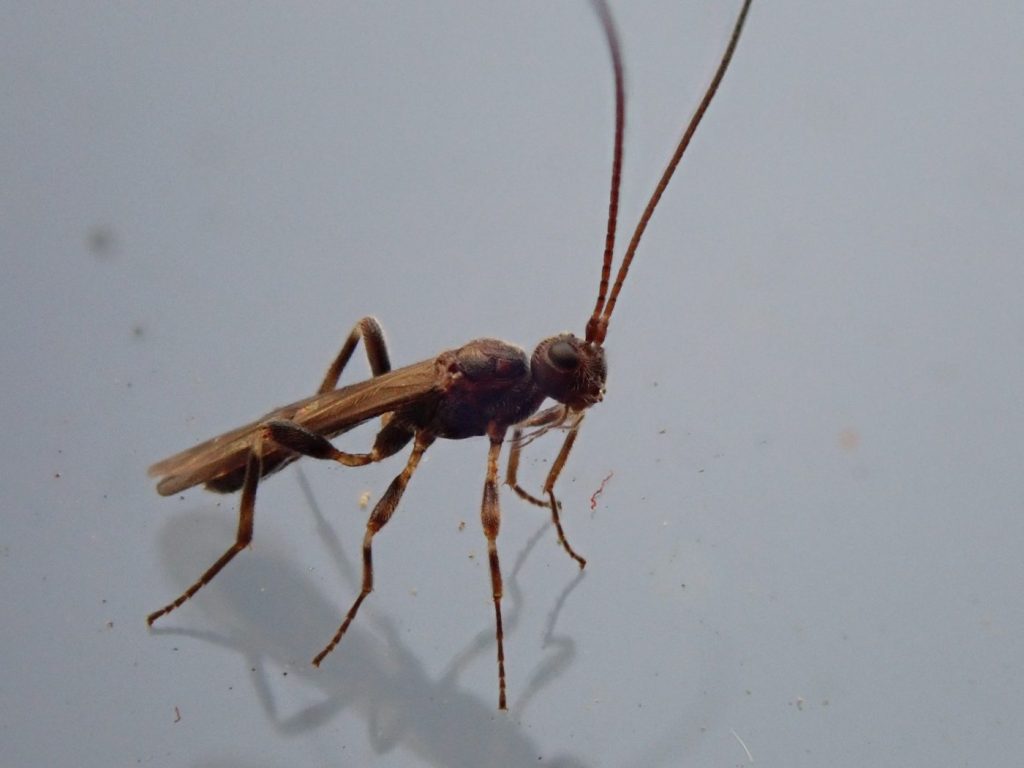
A tiny parasitic wasp less than a millimetre long. It is amazing how many insects are attracted to light, so it is often worth looking wherever there is light. This one was sitting on a window and did not seem to mind the camera being very close. 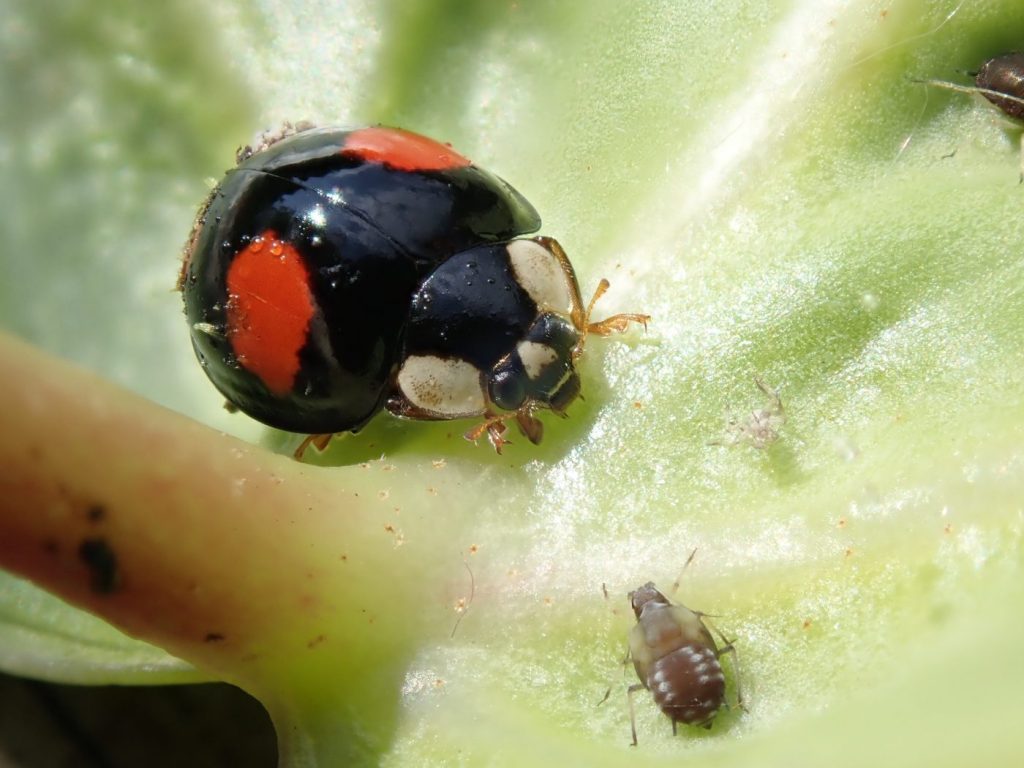
David versus Goliath! Here David doesn’t stand a chance. This is the harlequin ladybird. A large and extremely variable species that is not a native of the UK but has increased rapidly in numbers. The young aphid likely has little time remaining. 
Holly blue butterfly. This is a lovely and increasingly common species that is the most likely blue butterfly to see in your garden. There are many species of ‘blue’ but the holly blue is the only one to have blue on the undersides of its wings, a lovely silvery grey-blue. 
Adult aphid about to take off. Only the adults have wings. Aphids feed using a tube or stylet with which they pierce a plant so that they can feed on the nutrients inside. Here the stylet is very visible. 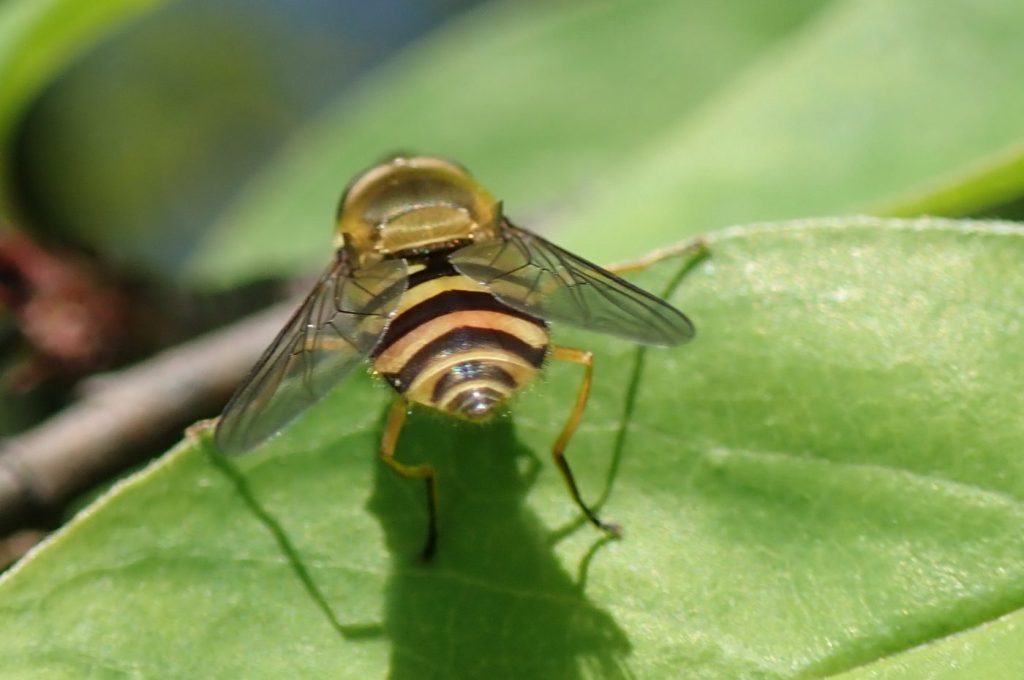
The common hoverfly, Syphus ribesii, looking like a jet about to take off. The larvae eat aphids, so the adult female flies spend a lot of time inspecting leaves looking for aphid colonies. 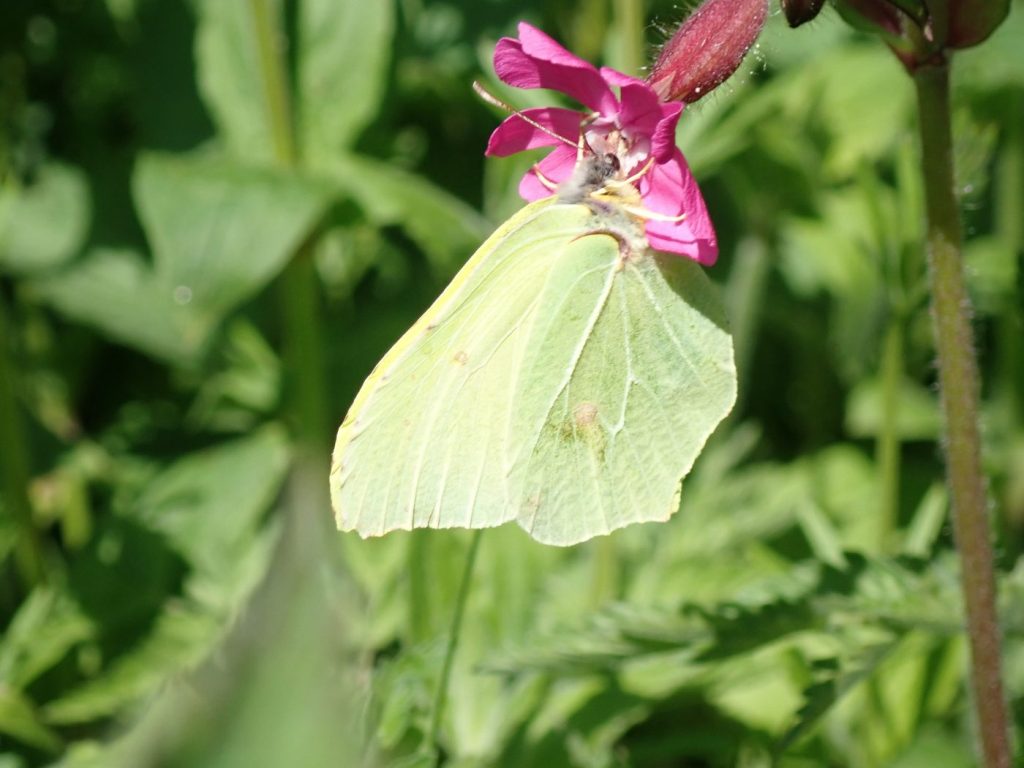
The brimstone butterfly feeding on campion. Brimstones are some of the earliest butterflies to emerge. The males are a striking bright yellow while the females are a very pale green-yellow. This is a male but both sexes have very pale undersides. 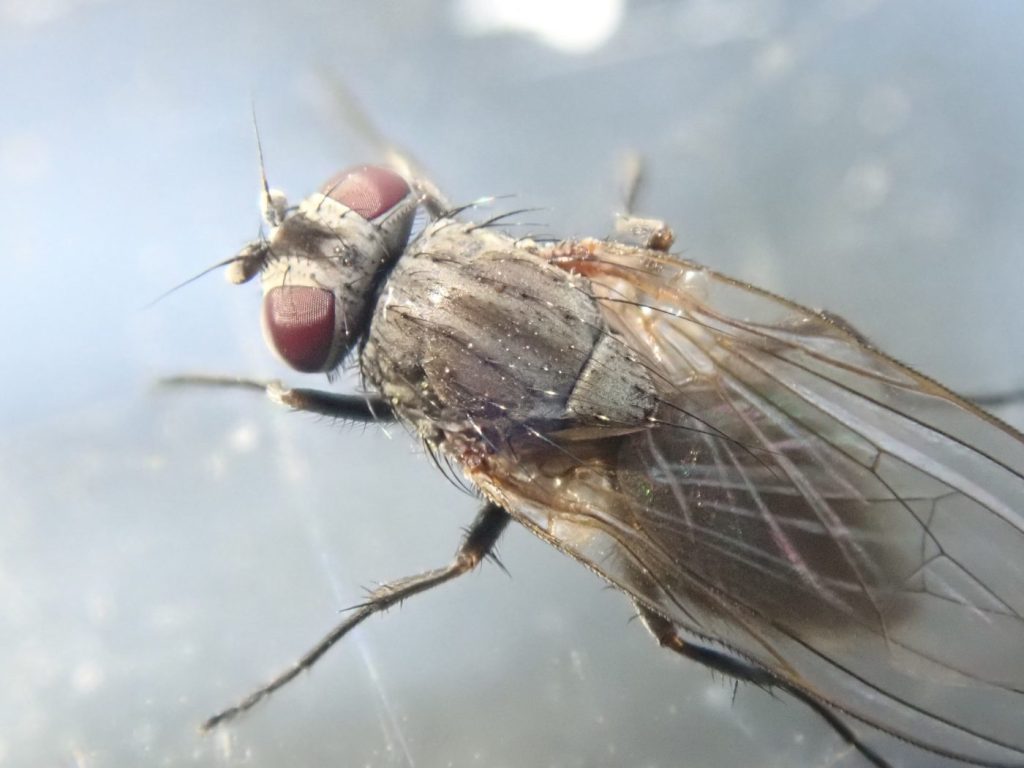
Close up of a fly sitting on a window in late evening. Some flies, like hoverflies, are well-studied and have good identification keys. ‘Ordinary’ grey flies like this one are much harder and generally need a microscope. This one is closely related to the house fly but I can’t say much more. I find them all beautiful close up. 
This is a tiny pea weevil. It is less than 2mm long and is currently trying to hide under a cow parsley flower. 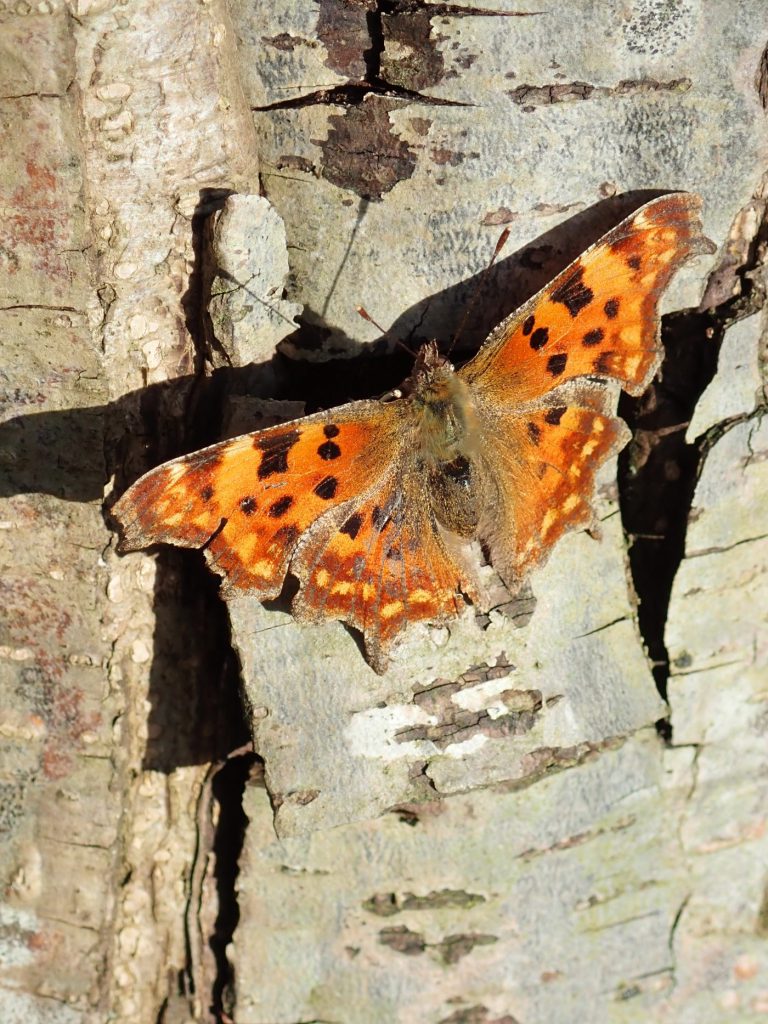
One of my favourite butterflies. Commas are names because when they fold their wings the underside is mottled dark brown with a little silver comma mark. With the irregular outline to the wings, they are very cryptic. Fortunately, they love to bask with their wings open like this one.
 Museum of Zoology Blog
10 thoughts on “Insect-eye view”