
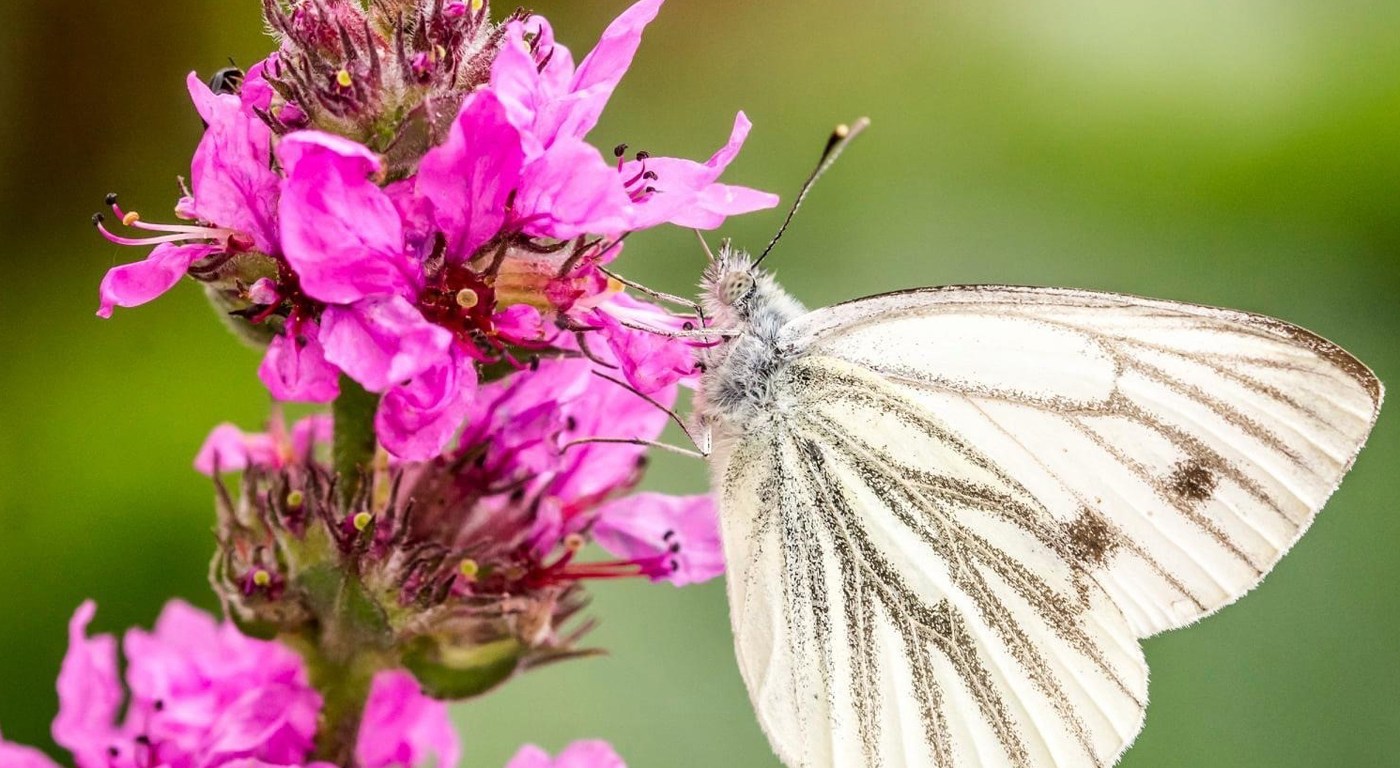
For Zoology Live! 2026, we are exploring the incredible world of insects. Insects are the little things that rule the world. We can’t survive without them. Insects pollinate our crops, control pests and process poo, amongst other important roles within habitats the world over.
On Thursday 2nd July, we went live on YouTube, joined by ladybird expert Prof Helen Roy, and butterfly expert Matt Hayes, who answered your questions about these amazing insects. You can look back here:
There were so many fantastic questions on the night, we didn’t manage to get through them all. But Helen and Matt kindly agreed to provide answers for them here:
Do ladybirds have ears
Ladybirds do not have ears but they can sense vibrations such as the movement of a leaf. Mostly they use chemicals and visual cues to find their way about the world.
How long do ladybirds sleep for on average?
Ladybirds become less active when it is cooler and when the light is fading – they spend all of the winter months in a dormant state and during the summer they will be more active at higher temperatures in the day time.
What do butterflies think of moths? and how fast can they fly?
Butterflies do not mind moths, but they are most interested in finding another butterfly of the same species so they can mate and produce the next generation. Some butterflies sit still in territories, waiting for insects to fly past them. They use their compound eyes to see other insects around them. They also use their antennae to ‘smell’ other insects nearby and inspect them. When something flies past, the butterfly will fly up to inspect the insect. If it was a moth or different species of insect like a fly, the butterfly will usually inspect it for a short amount of time, realise it is different and then fly away. If it is a butterfly of the same species, they usually interact for longer.
Studies have found that a group of butterflies called skippers can fly at nearly 60km per hour! That is as fast as a galloping horse. That is extremely fast and most butterflies are slower than this.
How many calories does a butterfly or ladybird consume per day?
The predatory ladybirds can eat 50 or more aphids a day but other ladybirds feed on plant material and some on mildews.
Adult butterflies drink nectar from flowers, which is a form of sugary water and is a very important source of energy for them. Butterflies can visit 100s of flowers a day and spend a large amount of time feeding so that they can get enough energy to power their flight muscles. However, due to their small size and the fact they do not generate their own body heat, this energy demand still doesn’t add up to much in terms of calories when compared to humans. Even if large butterflies were to fly vigorously for a full day, studies suggest this would only burn a few calories of energy. This is still a large amount for a small insect though!
Can ladybirds and butterflies hiccup?
Ladybirds can regurgitate food such as some species of aphid that are mildly toxic to them but don’t hiccup in the way we might.
Butterflies also don’t hiccup like we do as they do not breathe in air in the same way as humans and larger animals. Air diffuses into their bodies through tiny holes and tubes, rather than being sucked in by contracting muscles. Hiccups are caused by muscles spasming when breathing in and as butterflies don’t usually use muscles to do this they can stay hiccup free.
How long can a ladybird or butterfly survive or hold their breath underwater and can they swim?
Insects have tiny air passages linked to holes along their sides called spiracles. Air moves in and out of these spiracles and so if they are submerged for too long then these might fill with water and prevent the flow of air.
Ladybirds can move through water and if they fall into a puddle or pond can scramble to the side.
The same is true for butterflies, which also have spiracles that open into air passages along their body (trachea), which can fill with water if submerged. However, if they dry out quickly enough they can be saved. Butterflies cannot easily pull themselves through water if they fall in as their wings can become trapped and waterlogged, making it extremely difficult to take off and escape.
Are there dragonflies in the UK? if so, what are some common ones? we have mostly dragonlets where i live
Yes, there are about 40 species of dragonfly and damselfly that live in the UK. Dragonflies are generally larger and land with their wings open, whereas the smaller damselflies land with their wings closed. Some of these species are quite common and widespread. The biggest species are called Hawker dragonflies, like the Common Hawker, and are very powerful fliers. Slightly smaller species include Chaser and Darter dragonflies, like the Four Spotted Chaser and Common Darter dragonflies.
Can ladybird legs grow back?
Sadly not when they are adults but as they go through the stages of metamorphosis they essentially dissolve and reform and so essentially regrow all their limbs.
Zoology Live! 2026 Family Day
Want to find out more about insects and other wildlife? We are very excited to have a family day taking place over two sites this year! As well as hands on activities in the Museum, we have walks and workshops that you can join exploring the wildlife of Trinity College Fellow’s Garden on Queens’ Road, a space not normally open to the public.
Just Added: Beetle Workshop with Dr Chris Lyal

Saturday 4 July, 11.30am-12.30pm
Join Dr Chris Lyal, beetle expert from the Natural History Museum, and find out about the diversity and lifestyles of British beetles, an amazing and diverse group of insects.This workshop will be taking place at Trinity College Fellows’ Garden (map at the end of this blogpost).
Suitable for ages 8+
Ladybird Workshop with Prof Helen Roy

Saturday 4 July, 4.30pm-5.15pm
Inspired by the livestream and want to see ladybirds in the field? Why not sign up to take part in this in person ladybird workshop with Prof Helen Roy at Trinity College Fellows’ Garden.
Suitable for ages 8+
Booking essential
Wildlife Workshops at Trinity College Fellows’ Garden
Bird Walk with Andrew Dobson

Saturday 4 July, 7.00am-8.00am
There is something special about being in nature early in the morning. Join chairman of the Cambridgeshire Bird Club, Andrew Dobson, and enjoy the sights and sounds of birds in Trinity College Fellows’ Garden before the rest of Cambridge wakes up.
Suitable for ages 8+
Booking essential
Snail Workshop with Dr Richard Preece

Saturday 4 July, 11.15am-12.15pm
Join snail expert Dr Richard Preece as he explores the garden for snails and slugs – they are much more diverse than you may think, and live in many different habitats, including ponds and streams.
Suitable for ages 8+
Hoverfly Workshop with Prof Bill Amos

Saturday 4 July, 2.45pm-3.45pm
Join Prof Bill Amos and find out about the diversity and lifestyles of hoverflies, an amazing and diverse group of insects, important as pollinators and so much more.
Suitable for ages 8+
Minibeast Hunts

Saturday 4 July
- 10.30am-11.00am
- 11.30am-12 noon
- 1.30pm-2.00pm
- 2.30pm-3.00pm
- 3.30pm-4.00pm
11.30am-12 noon
Join researchers from the Museum’s Insect Ecology Group as they explore this beautiful garden, not usually open to the public, looking for minibeasts. Learn surveying techniques, and find out about some of the amazing insects that live around us.
Suitable for ages 6+
Pollinator Walks

Saturday 4 July
- 11.00am-11.45am
- 2.00pm-2.45pm
- 3.00pm-3.45pm
Join researchers from the Museum’s Insect Ecology Group as they explore this beautiful garden, not usually open to the public, looking for butterflies and other pollinators. Learn surveying techniques, and find out about some of the amazing insects that live around us.
Suitable for ages 8+
Pond Dipping

Saturday 4 July
- 10.45am-11.30am
- 2.15pm-3.00pm
Join members of the gardening team at Trinity College as they explore their beautiful pond for wildlife and show the secret world living beneath the water’s surface.
Suitable for ages 8+
(Please note that this activity will take place next to an open pond without any surrounding fencing. Please do not book on with very young children who may fall in)
How to get there
The entrance to Trinity College Fellows’ Garden is on Queen’s Road. If you have the What3Words app, the three word reference is foods.tables.tags
On the map below, the butterfly marks the entrance to the garden (on the same side of Queen’s Road as the University Library – the nearest pedestrian crossing is at the end of the path that crosses the river over Garrett Hostel Bridge. This road has a lot of accidents, so it is recommended that visitors use the pedestrian crossing.)

As this site is the other side of the city centre to the Museum, if are are attended activities at both we recommend leaving about 30 minutes to walk between the two.

