
Earlier this year, we had on display a small exhibition of zines on a theme of pollinators in the Museum. To celebrate World Bee Day on May 20th, we wanted to share these inspiring pieces more widely. Follow the Zines for Pollinators below, and learn how to make your own. This exhibition was curated by Nynke Blömer, PhD student in the Museum of Zoology, and featured work by early career female scientists
Pollinators

Pollination is the process by which pollen is transferred from the male part (anther) of a flower to the female part (stigma), allowing fertilisation and the production of fruits and seeds. It is an important step in plant reproduction and happens in different ways. Some plants rely on wind or water to carry pollen, while others depend on pollinators.
Pollinators are animals like bees, butterflies, birds, and bats, that transfer pollen as they collect nectar and pollen from flowers. They help plants reproduce. Many pollinators are insects, like bees, beetles, and flies.
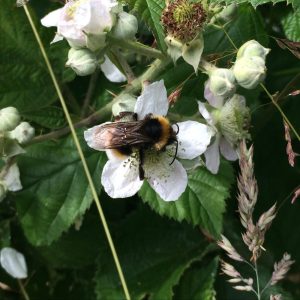
Pollinators are important for food security:
They pollinate about 75% of all flowering plants
About a third of our food crops depend on pollination
Without pollinators, we would not have oranges, tomatoes, and blueberries.
Beyond agriculture, pollinators help maintain natural ecosystems by supporting plant diversity and providing food and habitat for wildlife. Without them, many plants would struggle to reproduce, leading to declines in plant populations and the animals that depend on them.
Unfortunately, pollinators face threats from habitat loss, pesticides, climate change, and disease. Protecting them through conservation efforts, reducing pesticide use, and planting pollinator-friendly plants is essential for maintaining healthy ecosystems and ensuring stable food production. Their survival is directly linked to our well-being and the planet’s ecological balance.
Bumblebees in the United Kingdom
In the United Kingdom, there are 24 bumblebee species. Of those, 8 are listed as conservation priority species, meaning they could be threatened to go extinct in the future, if we do nothing. In the last 10 years, 2 species of bumblebee have gone extinct in the UK.
According to the Bumblebee Conservation Trust, last year was a terrible year for bumblebees.
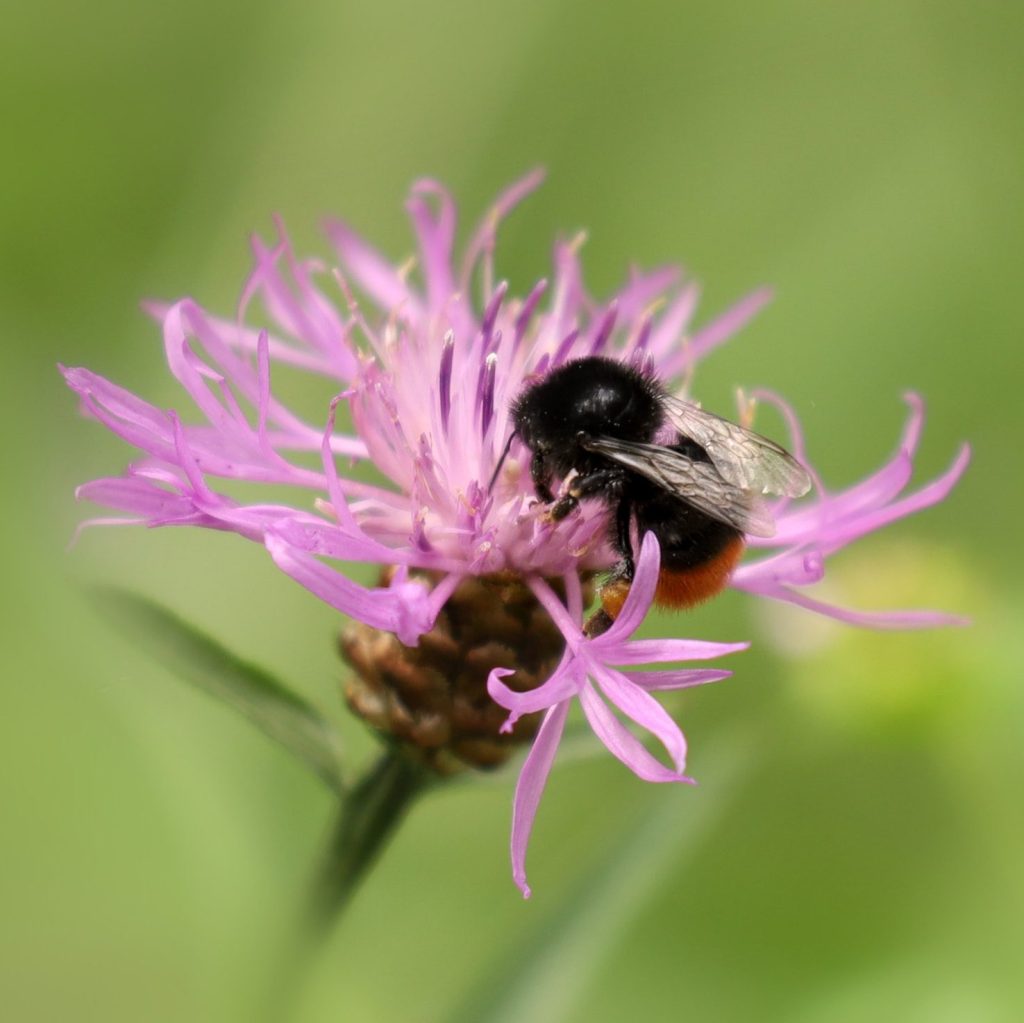
(image (c) Natalie T, flickr)
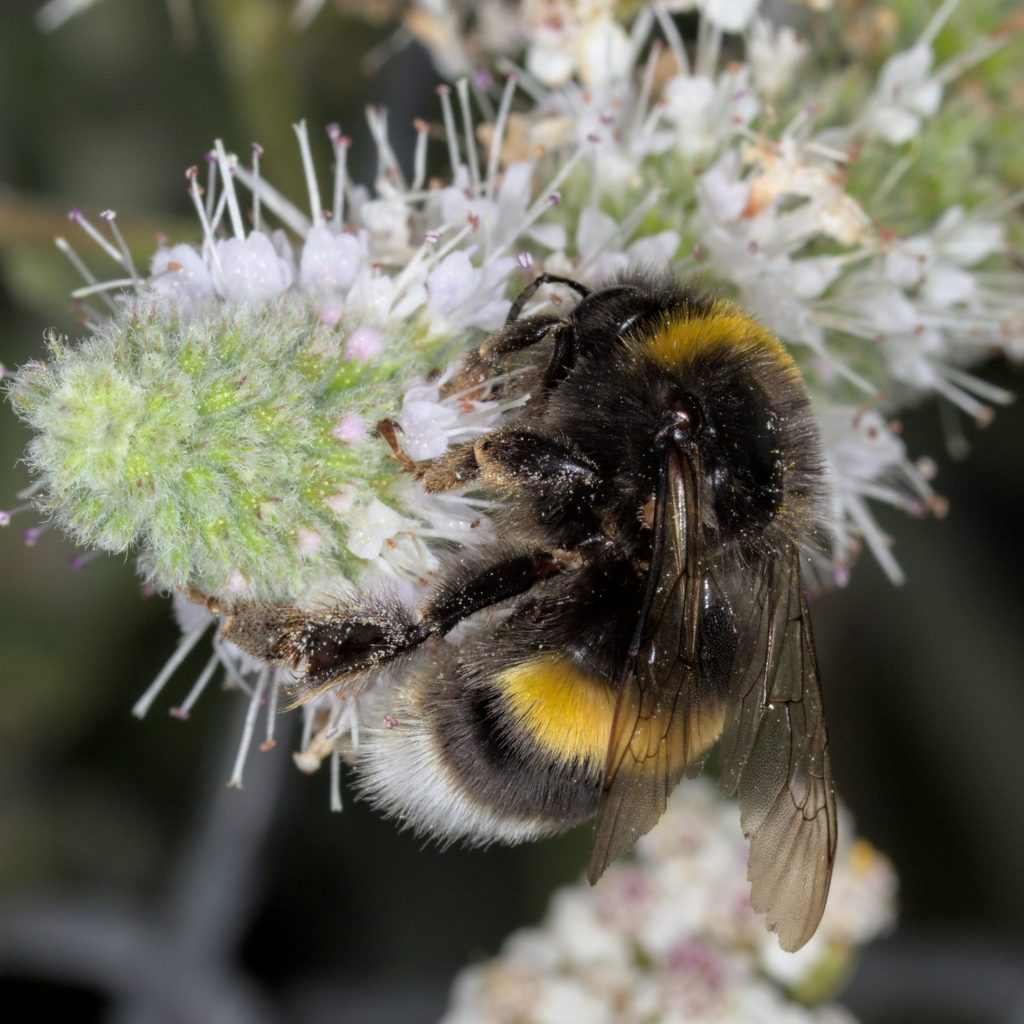
(image (c) Stanze flickr)

(image (c) Bob Knight, flickr)
The reasons for these declines are due to: climate change, habitat loss, and pesticides.
Climate change is leading to changes in the weather: wetter springs have led to bumblebees being flooded out of their nests, and heat waves in the summer can lead to bees becoming infertile and stressed. The changing climate is also affecting plants: flowers bloom at different times than usual, or they produce less nectar. This can also affect the pollinators that depend on them.
Habitat loss results in less places for bumblebees to nest and to forage. In the UK, 97% of wildflower meadows have been lost since the 1940s. Bees, and other insects, rely on wildflowers for food. Habitats can also be fragmented due to new agricultural fields, roads, and buildings.
Pesticides such as insecticides and herbicides can kill insects, including beneficial ones like bees, directly or lead to health issues. Stopping or reducing the use of pesticides helps bees.
Donate to the important work of the Bumblebee Conservation Trust via their website: www.bumblebeeconservation.org.
What do you feel?
Often, big problems like biodiversity loss and climate change can make us feel helpless and disempowered, maybe even eco-anxious. Finding solutions to these issues can feel like an impossible task and could make you feel alone and small.
It is important to remember that you are not alone, and that there are many people who feel the same. Creating change in the world starts with how you feel. Communicating that with others can create a community of people, all working together to create the future they want to see – just like a hive full of buzzing bees all working together for a collective future.
If you close your eyes and imagine a future you want to live in, what do you see? How does it make you feel?
What is a “zine”
A zine is a small magazine – it comes from the word “magazine”. They are usually independently published, low cost, and easy to distribute.
They are easy to make with an A4 piece of paper, by folding the paper in half several times to create 8 panels, and making a cut in the middle. Next, you can write, draw, paint, or collage any message you would like to share. You can find intrsuctions on how to make your own zine at the end of this post.
The FLOWER Training
The zines in this exhibition were made by young women living in Austria and Greece for a training called FLOWER: Facilitating Leaning and Womens’ Empowerment for pollinator Regeneration, organised by Pollinator Ambassadors and funded by Erasmus+.
FLOWER took place over three days in November 2024, with 20 women between the ages of 18 and 30 participating. Among the participants were scientists, artists, lawyers, and students.
Participants learned about pollinator decline, learned new ways to approach complicated problems such as biodiversity loss, practiced how it feels to be empowered, and envisioned a better future together.
At the end of the FLOWER training, the participants created zines to communicate a message, a call to action, or simply as a way to express themselves.

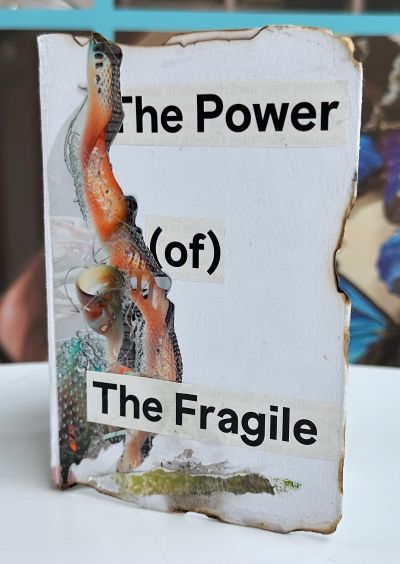
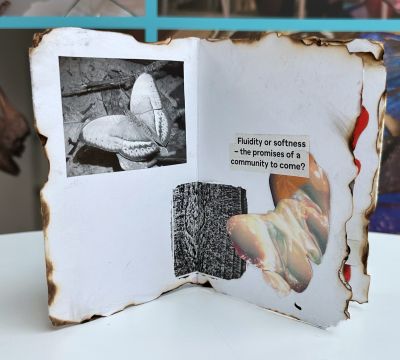
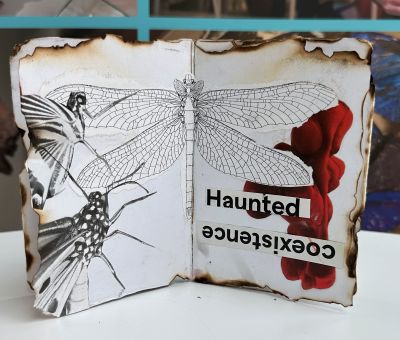
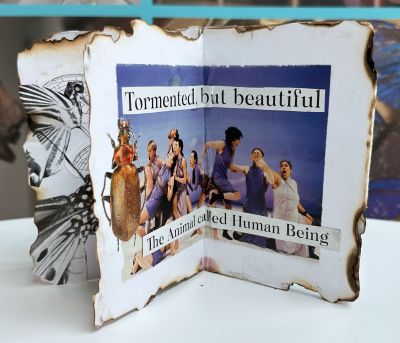
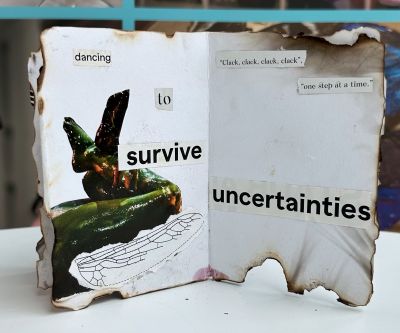
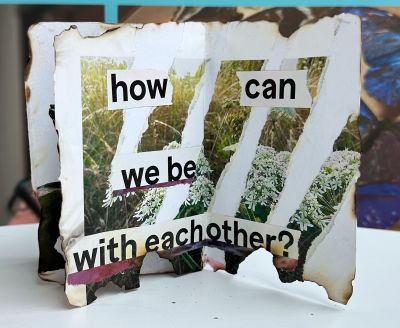
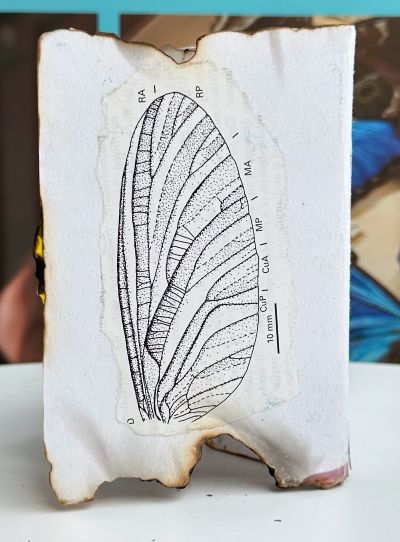
The Power (of) The Fragile
by Nani Chula
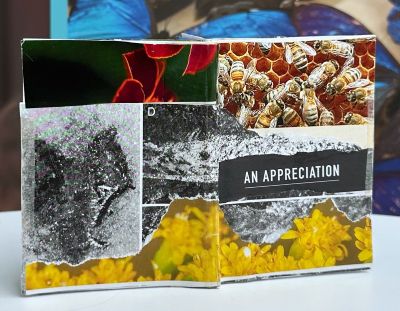
An Appreciation
by Nynke Blömer
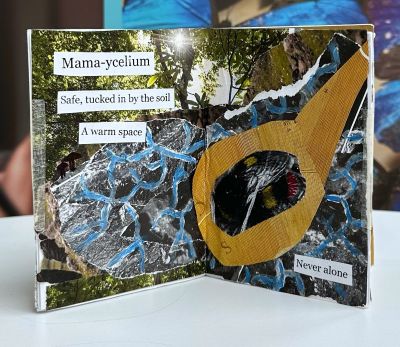
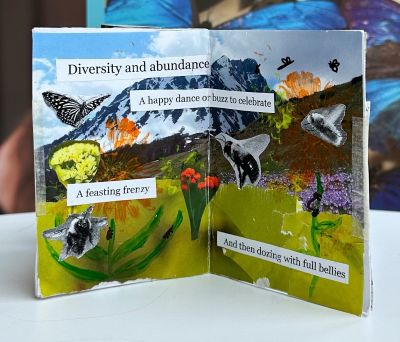
My zine is titled “An Appreciation”. It celebrates community in different ways: a community of bees in a hive buzzing together, a hibernating bumblebee surrounded by cosy soil full of mycelial networks (nature is all around us), and a celebration of different bees all eating from rich landscapes until their bellies are full. To me, feeling connected to others and nature is really important to feel like I belong in this world, and this feeling motivates me to work to understand it and protect it.

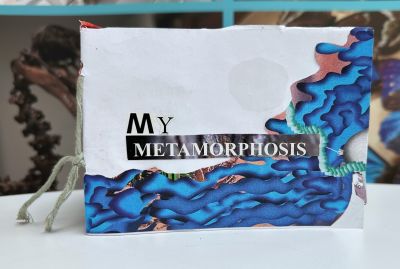
My Metamorphosis
by Vasileia Chatzaki
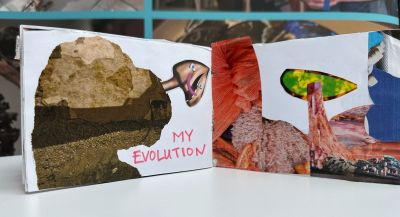
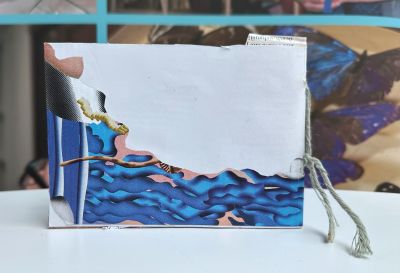
“My Metamorphosis” is a zine that envisions a world where pollinators are free to choose where they live, unhindered by human imprint. Inspired by the empowering slogan “My body, my choice,” this concept extends the idea of autonomy to nature’s smallest yet most vital creatures. In this imagined reality, pollinators select their own landscapes and evolve naturally, guided by their instincts and ecological needs. It’s a world where their survival and development follow unaltered evolutionary paths, paths that humanity has disrupted through intense landscape transformation. This zine serves as a reflection on what we have taken from these essential species and an invitation to dream of what could be restored. By granting them the freedom to reclaim their landscapes, choices, and evolution, we can imagine a future where pollinators thrive on their own terms. Just as the slogan advocates for respect and autonomy, this vision champions the innate right of pollinators to exist and flourish without interference.

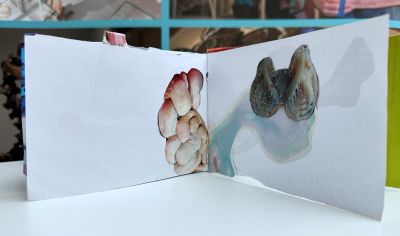
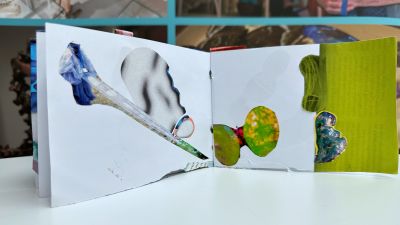
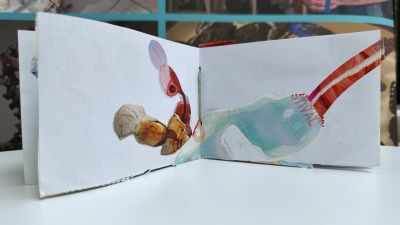
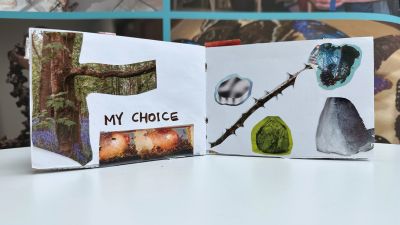

by Anya
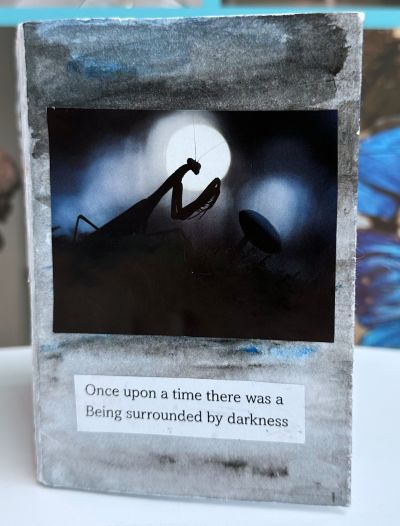
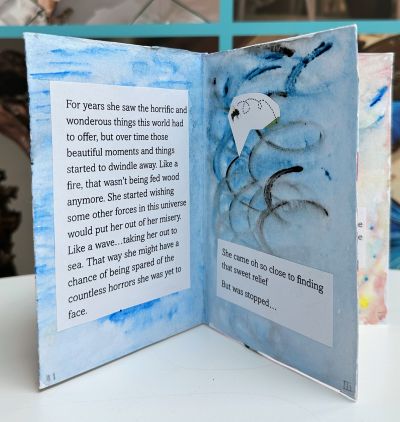
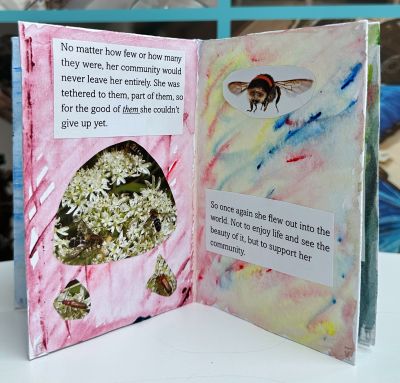
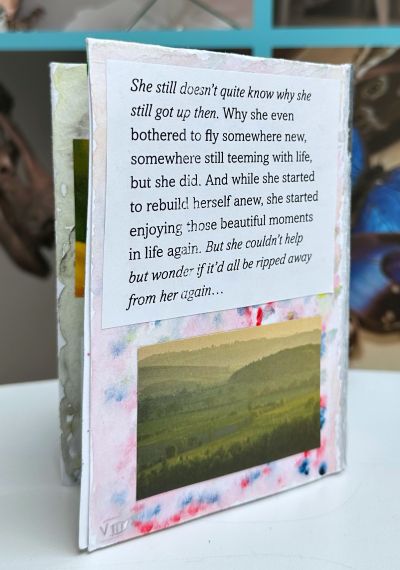
Through this zine I found a new way to express myself and all the mixed emotions and experiences I have gone through as a young woman in this day and age. Interpret it as you will… maybe you’ll read/see something you can relate to.

The Last Pollinator on Earth
by Maria Bellou
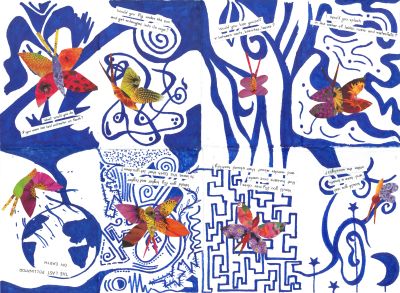
My zine emerged as a powerful visual metaphor of all the feelings I went through during our FLOWER workshop; hope but also despair, solitude but also solidarity. The thought that kept coming back to me was “what if we fail? what if we fail pollinators and we have to say goodbye to the last pollinator on Earth?”, but also “what if we do not fail? what if we manage to give pollinators all they deserve”. Eventually this story is a story of abandonment and a warning for anyone that wishes to listen.
The Gift of Soil
by Fabienne Palm
The soil is something precious. But what do we want to create with it? Seal the ground with pavement or let nature take its place? Everyone can decide for themselves what they want to do with the soil… not only in this zine, but also in his*her own life and in the future of all.
Where are they?
by Myrto Barda
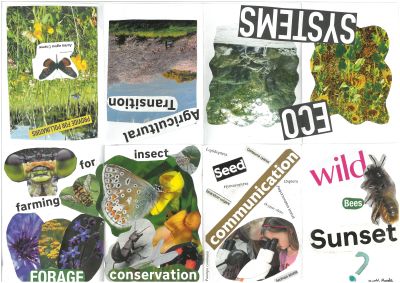
The number and variety of bees is far greater than most people believe. There are over 20,000 species of bees worldwide, but sadly, the honey bee is the only one most people are familiar with. Their high morphological and behavioural diversity make bees one of the most important pollinators in terrestrial ecosystems, including agroecosystems. Agroecological practices that support biodiversity, such as the provision of diverse floral resources in agricultural systems, can make a real difference for bee conservation and even boost crop production! Thus, it’s crucial to expand our knowledge about these amazing creatures and raise awareness about their importance. By understanding bees better, we can all play a part in protecting them.
Where are they now?
Land of Eternal Spring
by Yakinthi Kontou
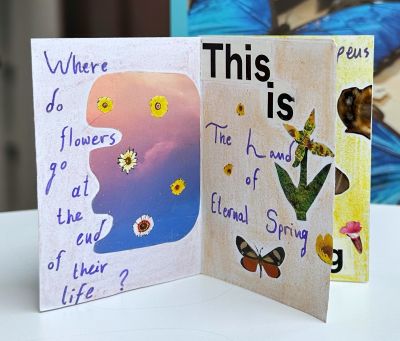
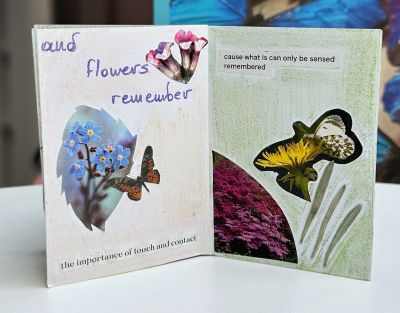
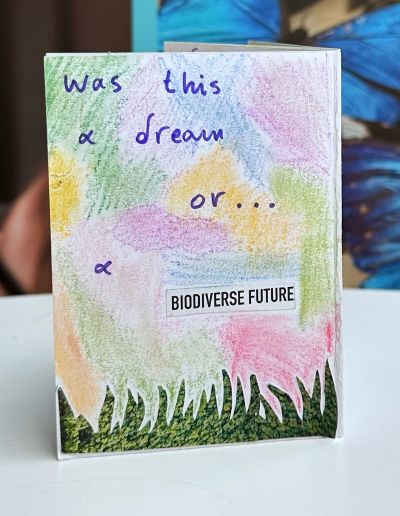
This zine invites you to explore the mystical “Land of Eternal Spring,” a place where flowers, at the end of their life, embark on a journey to Pollinator Land. Here, flowers dance and rediscover the significance of touch and connection, as it is through sensory contact that their existence is remembered. The zine blurs the line between dream and a biodiverse future, showing the delicate yet vital relationship between pollinators and flowers. Through vibrant images of flowers and their pollinators, this work sparks reflection on the interconnectedness of life and the importance of preserving this fragile balance.


Every Child has Bug Period
by Agnes Straβer
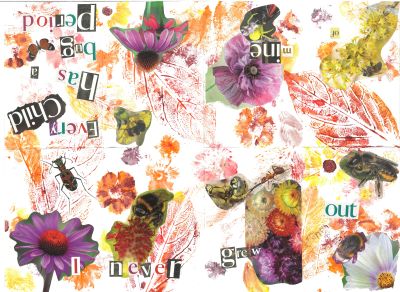
This is a reminder to stay curious and keep the spirit of your inner child alive.
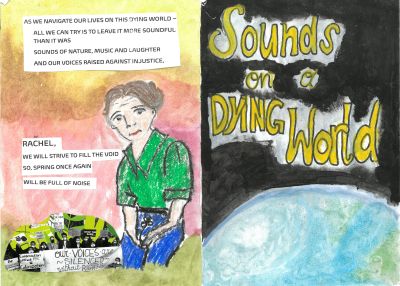
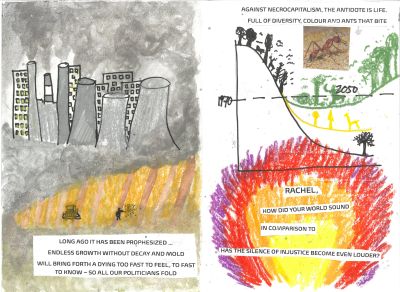
Sounds on a Dying World
Make your own zine
Have you been inspired by these fantastic zines for pollinators? Why not make your own? You can find fantastic instructions on how to here on the Tate website:
https://www.tate.org.uk/kids/make/cut-paste/how-to-make-a-zine
Youth and the environment
If you are a young person reading this, chances are you have learned about climate change and the biodiversity crisis at school.
Young people around the world are coming together to protest for climate change and the biodiversity crisis, and to call for more youth engagement in decision making.
Many young people today experience something called eco-anxiety, which is distress caused by the climate and biodiversity crises and feeling anxious about the future of the planet.
To cope with eco-anxiety, you can:
· Create art: express how you feel, maybe make a zine
· Take action: join your local environmental group, or start your own
· Educate: learning about the facts can help combat fear
· Build resilience: connect with like-minded people, take breaks
· Embrace optimism: focus on the positive work people are doing
· Engage with nature: go outside, go for a walk, or bird-watch
· Don’t feel ashamed, and seek professional help if necessary
Women in Entomology
At the University of Cambridge, women were not allowed to receive degrees until 1948. Cambridge was the last British university to allow this. In 1897, there was a proposal to grant women recognition of their degrees and resulted in a massive protest against the proposal on King’s Parade. The proposal was rejected, with a majority voting “no”.
Still today, women in science face considerable challenges. In the field of Entomology, only 12.5% of university department heads are women, according to the Cornell Chronicle.
Around the world, women’s rights and access to education are still under threat:
Since the Taliban took over in 2022 in Afghanistan, women are no longer allowed to attend university and girls over the age of 12 are denied an education.
Earlier this year, the governments of the United States of America and the Netherlands announced budget cuts to their foreign aid, specifically cutting funding for women’s rights and gender equality.
Pollinator Ambassadors
Pollinator Ambassadors is a non-profit association for biodiversity regeneration and artistic engagement with nature, registered in Austria. It was co-founded by Nadine Schuller and Nynke Blömer in 2019 as a response to lack of youth engagement in European pollinator policies.
Nadine Schuller is a political scientist, artist, and activist, and Nynke Blömer is a conservation scientist and beekeeper currently pursuing a PhD at the Department of Zoology, University of Cambridge.
Instagram: @pollinatorambassadors
Website: pollinatorambassadors.org
 Museum of Zoology Blog