

Sofia Dartnell, PhD student in the Department of Zoology, writes:
You’ve heard of honeybees, but who are those big, fluffy bees taking flight as it gets warmer each spring? These are bumblebees, a group of about 260 species that are the larger cousins of honeybees. Bumblebees are known for their ‘buzz pollination’ abilities, physically buzzing flowers at a different frequency than other bee species to encourage flowers to release their pollen.
Like honeybees, bumblebees live in social colonies with a queen. Queen bumblebees hibernate underground, emerging in the early spring to begin work collecting pollen and starting colonies. Their eggs become worker bumblebees, and, interestingly, all worker bumblebees are female. These sisters work together, foraging for nectar and pollen and helping to raise future worker generations. Once the colony has grown large enough, the queen bumblebee starts producing new queens and males, who leave the colony to mate. Bumblebee colonies only live for one summer. Only the new bumblebee queens survive through the winter. They hibernate underground to keep warm until the temperatures start to rise again in the spring.

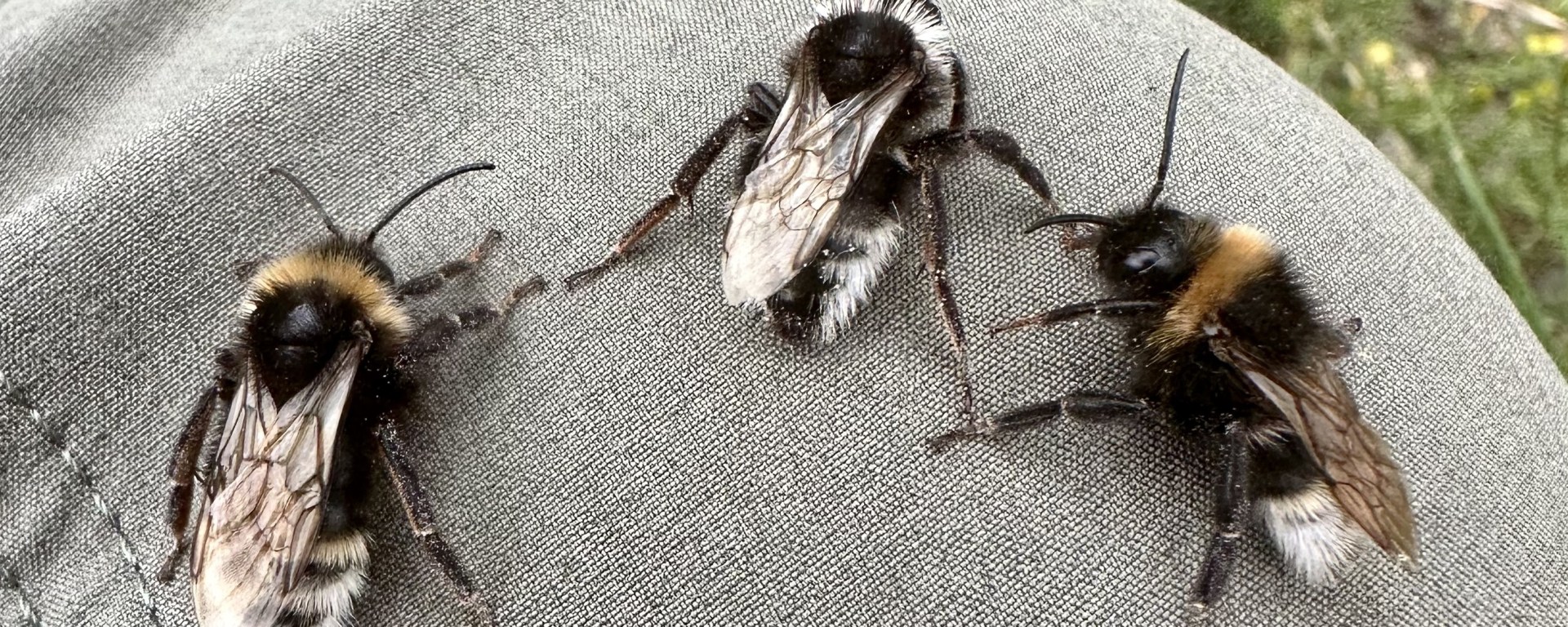
I study a unique group of bumblebees that have evolved to become parasites: the cuckoo bumblebees. Rather than going through the enormous effort of starting a colony, cuckoo bumblebees have evolved to invade one that has already been established. Even if they wanted to start a colony of their own, they are no longer able– they lost the specialized hairs on their legs that bees need to collect pollen and cannot lay worker bumblebee eggs. To produce new parasites, cuckoo bumblebees must invade a developing colony of another bumblebee species. Bumblebees use their sense of smell to detect strangers in their colony homes. Cuckoo bumblebees can sneak inside using chemical camouflage that helps them remain undetected. This means that either they smell of almost nothing – an “invisibility cloak” of sorts – or that they have evolved to smell nearly the same as their host species. Once they’ve snuck in, cuckoo bumblebees kill the queen of that colony and take over command, convincing the workers inside to help raise future parasite generations.
This process may sound a bit evil, but it is thought to be part of nature’s checks and balances system. Different plants need to be visited by different pollinators to produce seeds. Cuckoo bumblebees can only survive in areas with a strong population of their host species. They do not entirely eliminate their host from the area but rather take their population down to a more stable level, which might benefit other pollinator species. I am interested in the lifecycle of cuckoo bumblebees, and how their populations sustain themselves. In my PhD research, I am collecting data that will help us understand where cuckoo bumblebees thrive, and how this unique and fragile host-parasite relationship can survive over time. There are 6 species of UK cuckoo bumblebees, and my research has given me the unique opportunity to explore Cambridgeshire from the perspective of bee-friendly spaces, from the Cambridge University Botanic Garden to farm fields and college gardens. So this spring, when you see a bumblebee buzzing around a flower for pollen, take a moment to appreciate the delicate balance of nature—where every species, even the sneaky cuckoo bumblebee, plays its own fascinating role in the ecosystem.
 Museum of Zoology Blog
One thought on “The life of the cuckoo bumblebee”