

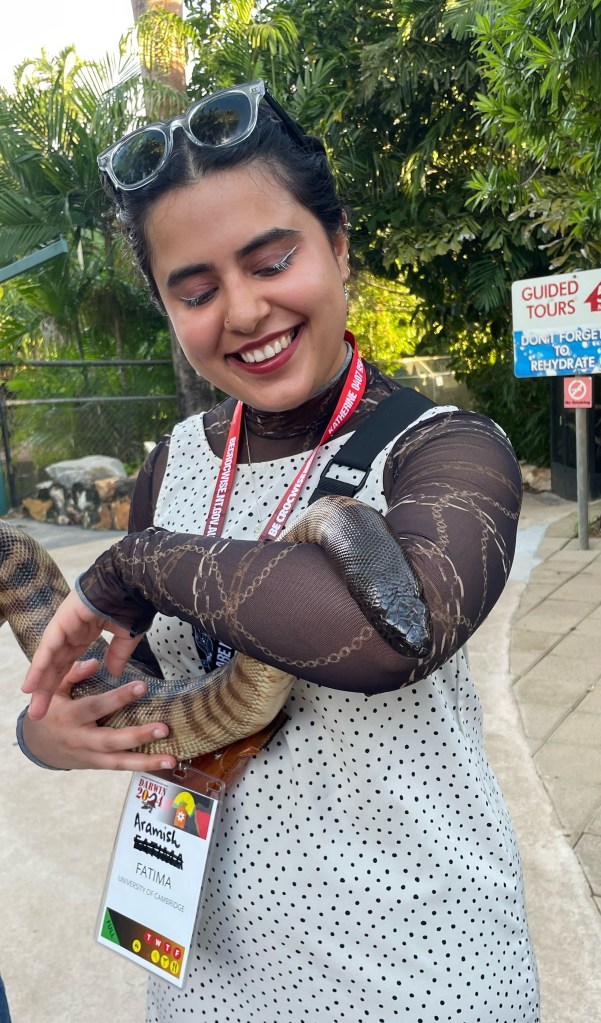
Aramish Fatima, PhD student in the Department of Zoology, writes:
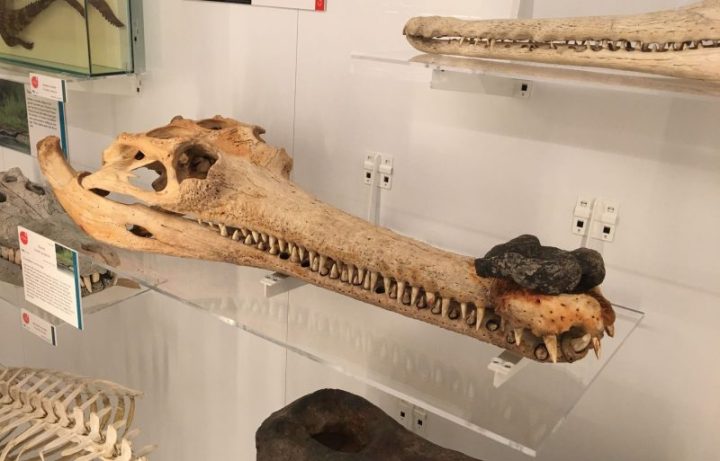
When you think of crocodiles, you might imagine powerful, fearsome predators lurking in murky waters. But not all crocodylians fit that image. The Indian gharial (Gavialis gangeticus) is a unique and fascinating species—distinguished by its long, slender snout adapted for catching fish and a more peaceful nature compared to its relatives. Once found in abundance across the major river systems of South Asia, gharials are now critically endangered, with only a few fragmented populations remaining.
Mapping the Past and Predicting the Future
One of the biggest challenges in conserving gharials is understanding where they can thrive. Many of their historic habitats have been lost due to dam construction, sand mining, and increasing competition for water resources. By using SDMs, I analyze environmental factors such as temperature, precipitation, and river flow to identify areas that were once suitable for gharials and predict where they might persist in the face of climate change. These models help us pinpoint potential sites for habitat restoration or reintroduction efforts.
Unlocking the Secrets of Gharial DNA
Beyond habitat loss, gharials also face another major problem—genetic bottlenecks. When populations shrink, they lose genetic diversity, which can make them more vulnerable to disease, environmental changes, and reproductive issues. By comparing historical DNA from museum specimens to modern populations, I aim to understand how much genetic diversity has been lost over time. This information is crucial for breeding programs, ensuring that captive populations maintain as much genetic variation as possible before being reintroduced into the wild.
Why This Research Matters
The conservation of gharials is not just about saving one species—it’s about protecting entire freshwater ecosystems. As top predators, gharials play a key role in maintaining the balance of riverine habitats. Their presence indicates a healthy, biodiverse ecosystem, which benefits countless other species, including those that human communities rely on.
Through this research, I hope to provide the scientific foundation needed to guide conservation strategies. Whether through habitat restoration, captive breeding, or policy changes, the goal is to give gharials the best chance of survival. By combining historical records, ecological modelling, and genetics, we can better understand this ancient species and ensure that future generations can continue to witness these remarkable animals in the wild.
 Museum of Zoology Blog
One thought on “Saving the Gharial: Combining Science and Conservation”