BioBlitz logo

BioBlitz 2020 at the Botanic Garden

We are excited to announce that this year’s BioBlitz will be taking place in the Cambridge University Botanic Garden from 5pm on Saturday 19 September to 5pm on Sunday 20 September. During this 24 hours we will be counting as many species as we can in the garden. You can take part by visiting the garden and adding your data to the Cambridge BioBlitz 2020 … Continue reading BioBlitz 2020 at the Botanic Garden

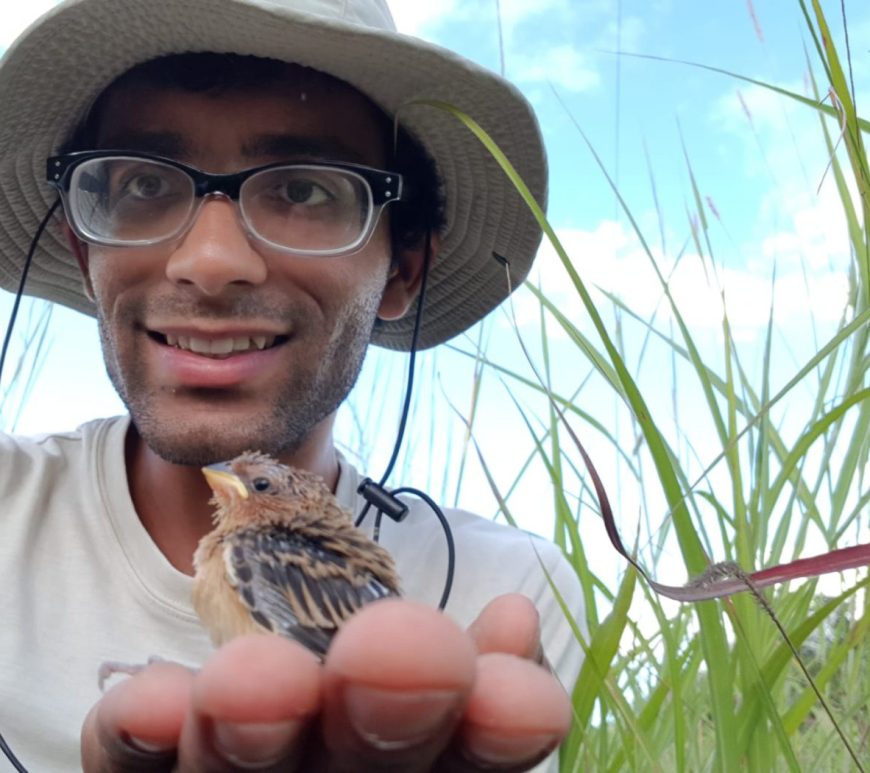
Tanmay with cuckoo finch

Perfect signatures and perfect forgeries

Tanmay Dixit writes: I am studying the African cuckoo finch, which as its name suggests behaves like a cuckoo: it lays its eggs in the nests of ‘host’ birds, namely warblers. The warblers have evolved to reject eggs of the cuckoo finch, which has resulted in the cuckoo finch accurately forging the complex patterns (‘signatures’) of their hosts. How should hosts respond? I am trying … Continue reading Perfect signatures and perfect forgeries

Photograph of a specimen of a field vole

Animal Alphabet: U is for Unicornfish and V is for Vole

Join us every Tuesday as we make an alphabet from the animals in the Museum of Zoology. Today is the turn of letters U and V: U is for unicornfish and under the sea. V is for vole, venus flower basket, vermilion flycatcher, viper and viscacha. Can you think of any others? Join us next week as we explore the animals in the Museum beginning … Continue reading Animal Alphabet: U is for Unicornfish and V is for Vole

Copyright All rights reserved by Steve Balcombe

Studying evolution through the specialisations of burying beetles

Swastika Issar, PhD student, writes: “I’ve always been fascinated by how new species can emerge from the way populations adapt to their local environments. For my PhD, I worked on the burying beetles. These incredible insects turn the carcass of a small vertebrate, such as a bird or a mammal, into an edible nest for their larvae. I was interested in studying how local adaptations … Continue reading Studying evolution through the specialisations of burying beetles

Paper okapi

Okapi? Okapi!

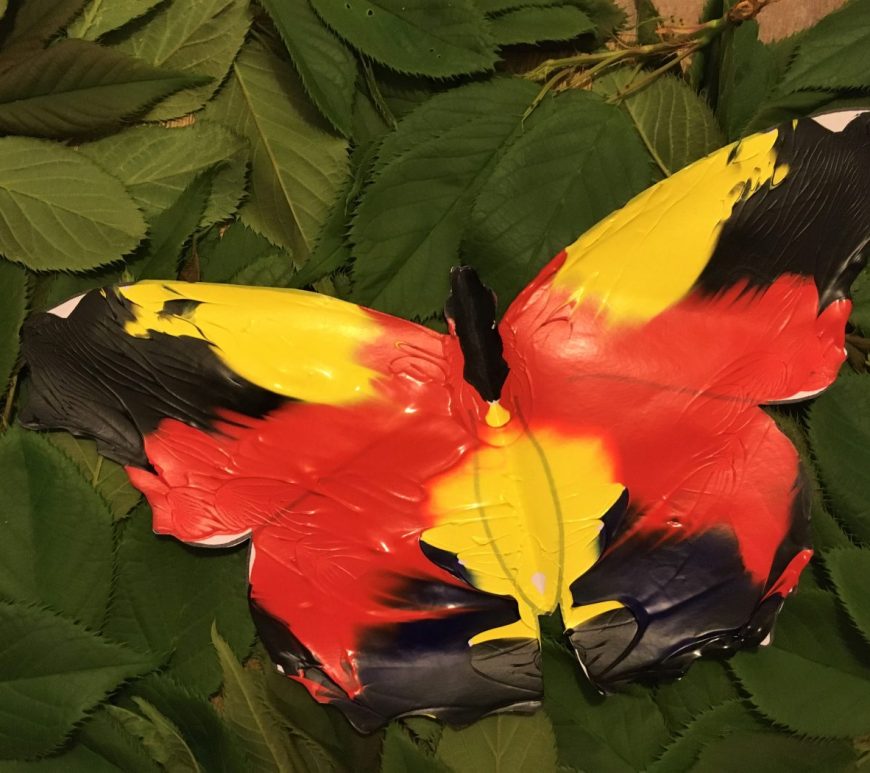
The okapi is the only living relative of giraffes and looking closer you can see the similarities. It has camouflaging body patterns, large ears and the males have stout horns above the eyes (ossicones). They even have a similar long, prehensile (meaning that it can grasp things) tongue, just like a giraffe. This helps them to quickly strip leaves from tree branches. They are however, … Continue reading Okapi? Okapi!

Parasitic finches mimic their hosts to deceive foster parents

Gabriel Jamie writes: Research recently published in the journal Evolution shows that the nestlings of brood-parasitic finches mimic the appearance, sound and movements of their host’s chicks. Working in the savannas of Zambia, Dr Gabriel Jamie and a team of international collaborators collected images, sounds and videos over four years to demonstrate this striking and highly specialised form of mimicry. The study, funded by The … Continue reading Parasitic finches mimic their hosts to deceive foster parents

Fin whale illustration - (c) Angela Wade

Look Copy Make – Fin Whale

Join artist Kaitlin Ferguson as she talks you through how to Look, Copy, and Make with the Museum of Zoology’s fin whale skeleton. You will need: Paper Pens or pencils Scissors Kaitlin’s whale tail template Video of fin whale skeleton: https://youtu.be/CEb2UyXZq_w These activities can be enjoyed by anyone and have been made with young people with special educational needs or disabilities (SEND) in mind. See … Continue reading Look Copy Make – Fin Whale

Photograph of a hoverfly hovering

An Insect A Day Part 11

Have you noticed some of the amazing insect life living around us this summer? Prof Bill Amos of the Department of Zoology has been keeping a photo diary of insects this year. Here it continues with some lovely metallic insects, a stone-like bush cricket, and some fabulous action shots: You can see more of Bill’s photographs on the blog: An Insect A Day for bee … Continue reading An Insect A Day Part 11

Barn owl close up

Owls

Did you know it was International Owl Awareness Day on Tuesday 4 August? To celebrate this week, here are some of the owls you might be lucky enough to see in the UK. These are truly fascinating animals, with some amazing adaptations for their way of life. So let’s go explore these night-time wonders… Silent Flight Have you every listened to the sound of a … Continue reading Owls

wildflowers in the city (c) Stanley Quek

Singapore’s Nature Ways

Stanley Quek, an MPhil student focusing on assessing the effectiveness of the Nature Ways network in Singapore, writes: Singapore is an island country in the biodiverse region of Southeast Asia. Singapore is also a large city, with urban landscapes dominating the island. In the past, Singapore was completely covered with dense primary forests and mangroves, however, much of that has been lost with the development … Continue reading Singapore’s Nature Ways